
small business

Post image for The 10 Best (and Worst) “Cloud Computing Explained” Videos on YouTube

Cloud Computing has been around for many, many years now. Ok, at least 5 years using the name “cloud computing.” Ever since this new way of consuming compute, networking, storage and other infrastructure resources got off the ground, no pun intended…well, sort of…people and companies have tried to explain what exactly it is. From the barrage of written definitions “officially” sanctioned by various organizations across the globe, to the mainstream media and marketing monoliths defining the cloud as anything on the Internet, the descriptions and definitions have been flung around like rice at a wedding.

The important thing here is that cloud computing isn’t going away any time soon. It may be re-defined, re-purposed and re-packaged in a million different ways, but in the end, it remains a viable alternative to self-hosted or on-premises physical infrastructure. It can be dramatically cost-effective if architected and deployed properly and it can provide unparalleled performance and scalability to companies and businesses requiring flexible and dynamic infrastructures.

HTD-best-and-worst-cloud-on-YouTube

Whether you are a business unit in a large enterprise or a mom & pop shop that is outgrowing a traditional single-server environment, the cloud is most likely a good fit. It can be a replacement to existing, aging infrastructure or an extension to a data center or colocated hosting environment. And there are countless use cases and models that the cloud can encompass. I’m not going to go into these here (but you might want to read through some of my earlier cloud computing posts to get some ideas).

The Best Cloud Computing Explained Videos

[click to continue…]

{ 0 comments }

Post image for Agile Development & Big Data Management – Perfect for the Cloud

I’m a firm believer that cloud computing helps companies innovate. It provides resources, services and infrastructure at a fraction of the cost and in less time than it would with a traditional infrastructure rollout. By dramatically reducing internal times to deployment and capital expenditures, businesses are given the ability to iterate more quickly, be more competitive in releasing products and features and get time-to-market timelines to the lowest numbers ever.

Similarly, just as critical to businesses as the cloud is, Big Data, development and deployments have rapidly become one of the most sought-after resources and services in near memory. Data of customers, users and businesses is growing at exponential rates with the introduction of the social graph and social media, integrations of legacy data stores and the simple fact that more people are being tracked, categorized and measured in different ways than ever before.

big-skyscraper-windows-cloud

The coupling of these two movements, cloud and big data, is challenging businesses worldwide on crafting the best solutions for their customers. While opportunities abound, it is frequently difficult to discover and use the best solutions to get your products or services to market quickly and manage all of the data that drives this innovation and development from the back end.

When you combine the forces of cloud computing with agile development and/or Big Data, you get solutions never before available in the forms of software solutions as cloud server images. What does this mean exactly? Basically, yet another acceleration in that time-to-market journey. Within literally minutes, businesses can deploy IBM solutions for both agile development and Big Data and have their respective teams up and running in no time.

[click to continue…]

{ 0 comments }

Post image for Cloud Means Freedom – Evolution & Revolution
When you think about earth-bound items, you think of things that are landlocked, tethered to a solid object or constrained by physicality. We, as a species are largely terrestrial, grounded with our feet on the ground and limited by gravity. For centuries if not millennia, humankind has dreamed and endeavored to break away from terra firma and soar beyond what surrounds us, to fly with the birds, to journey off into space and to explore that which we do not know. The spirit of exploration and the quest to understand the unknown propels us as a civilization to move beyond our established, comfortable environments.

From the tales of Icarus who attempted to escape the confines of Crete by means of flying like a bird in the clouds, to the Wright Brothers flight tests at Kitty Hawk, to the incredible journeys of NASA’s rover Curiosity, our future is in the sky. Those dreamers who push the limits of the known are uncommon and therefore noteworthy. But every person on this earth dreams to invent and create, even in the smallest of ways. Innovation is what propels our societies forward. And never before have we had the tools and means to innovate and create.

Having worked for the past 5 years in the cloud computing landscape, or should I say, “skyscape,” I have witnessed an evolution or dare I say, a revolution. Sure, cloud technology has advanced, bringing all types of innovation, new services and features and plenty of new players to the marketplace. This is typical of evolution. A new concept is developed, it is vetted and tested, first movers begin to adopt it and it either grows or dies, depending on the adoption, the speed of this adoption and how much force is behind it. But in terms of it being a revolution, that is where the freedom comes into play.

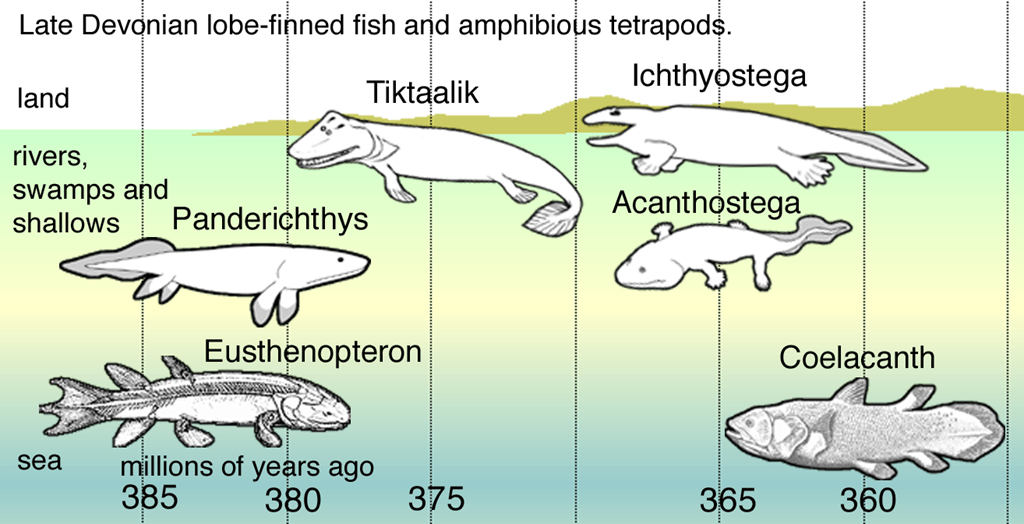
Let’s take some examples here. First let’s start with evolution. The one that always comes to my mind is that of the 375-million-year-old Tiktaalik roseae which was a critical evolutionary animal that represented the transition from swimming fish to animals that walked on land. As the Tiktaalik evolved from a deep water-based environment to more shallow waters, their bodies adapted and evolved to work better in a changing environment. As the Tiktaalik moved into more shallow water, it needed to be able to support its larger body as it fed. These appendages (formerly fins) were used to prop its body and pull itself along. Over time, not only did exterior changes take place, but even the bony element in fish, previously used to coordinate the feeding and respiration motions of the head, transformed over time to create the bones that would eventually be used for hearing. As this transformation took place that meant that gill respiration was used less, especially in shallow water. This led to the development of primitive lungs (in combination with the existing gills). But enough about evolution. This particular species adapted to its environment and evolved to survive. Shallow water lacked oxygen and the evolution of lungs meant not only survival but freedom to enter into new environments.

Fishapods

[click to continue…]

{ 0 comments }

Post image for Walking Through IBM’s New iPad Cloud Application
ibm-ipad-iconIt’s no surprise that I’m writing about clouds and iPads and applications. If you do a search on my site, you will see that I write about all 3 of these topics, just never at the same time. When I found out that IBM had produced a Cloud application, my interests were sparked for many reasons: 1) I helped produce a cloud management app for the company I work for 2) anything that helps to spread a well thought out explanation of cloud computing is good for the cloud industry as a whole and 3) full disclosure, this article is sponsored by IBM.

Let me address the 3rd point first. So while this is a sponsored post, the ideas and analysis of the IBM iPad application are entirely mine, and not subject to the approval or editing of IBM. There, I said it. Rest assured that I will analyze this application with the same non-biased seriousness that I do with any other application or software or product that passes my desk.

When I heard that IBM had created a cloud application, my thoughts were immediately that they had crafted a management console to allow you to control IBM-based infrastructure or servers. But once I launched the application, I realized that it was more properly designed as a tool to educate an end-user on what cloud is and the capabilities that IBM can provide to businesses.

Photo Mar 12, 4 58 24 PM

The most important start to any cloud project or implementation is that of education. Let’s face it, you wouldn’t buy a car without doing some sort of research first. And, obviously, if you are reading this article, you are probably doing some deeper dives into cloud computing to understand the best practices on how to proceed. (Be sure to read some of my other IBM-sponsored content here that can help with that education process.)

[click to continue…]

{ 0 comments }